
Stepping into a Street That Breathes History
In Istanbul, you can encounter history at every turn; however, some places do not merely carry traces of the past, but continue to bring that past to life today. Located in the heart of Eminönü, the Egyptian Bazaar is one of these rare places. If the scent of spices fills your nose the moment you hear its name, you’re not alone. Because the Egyptian Bazaar is not just a marketplace—it’s a sensory time capsule.
The Birth of the Egyptian Bazaar: More Than Just Spices
The Commercial Wing of the New Mosque Complex
The history of the Spice Bazaar dates back to the 17th century Ottoman Empire. Construction began in 1597, but due to various political and economic difficulties, it was not completed until 1664. The person who completed its construction was Turhan Sultan, the mother of Sultan Mehmed IV. The bazaar was originally built as a commercial center to generate income for the endowment of the New Mosque.
Why “Egyptian” Bazaar?
Although the name suggests that the bazaar only sells products related to Egypt, the reality is quite different. During the Ottoman period, Eminönü was the main port through which spices and exotic products from Egypt reached Istanbul, so the bazaar gradually came to be known as the “Egyptian Bazaar” among the people. Even today, as you stroll through the bazaar, you can feel the exotic atmosphere where East and West intersect.
A Silent Elegance from Architecture
Art Crafted by Master Hands
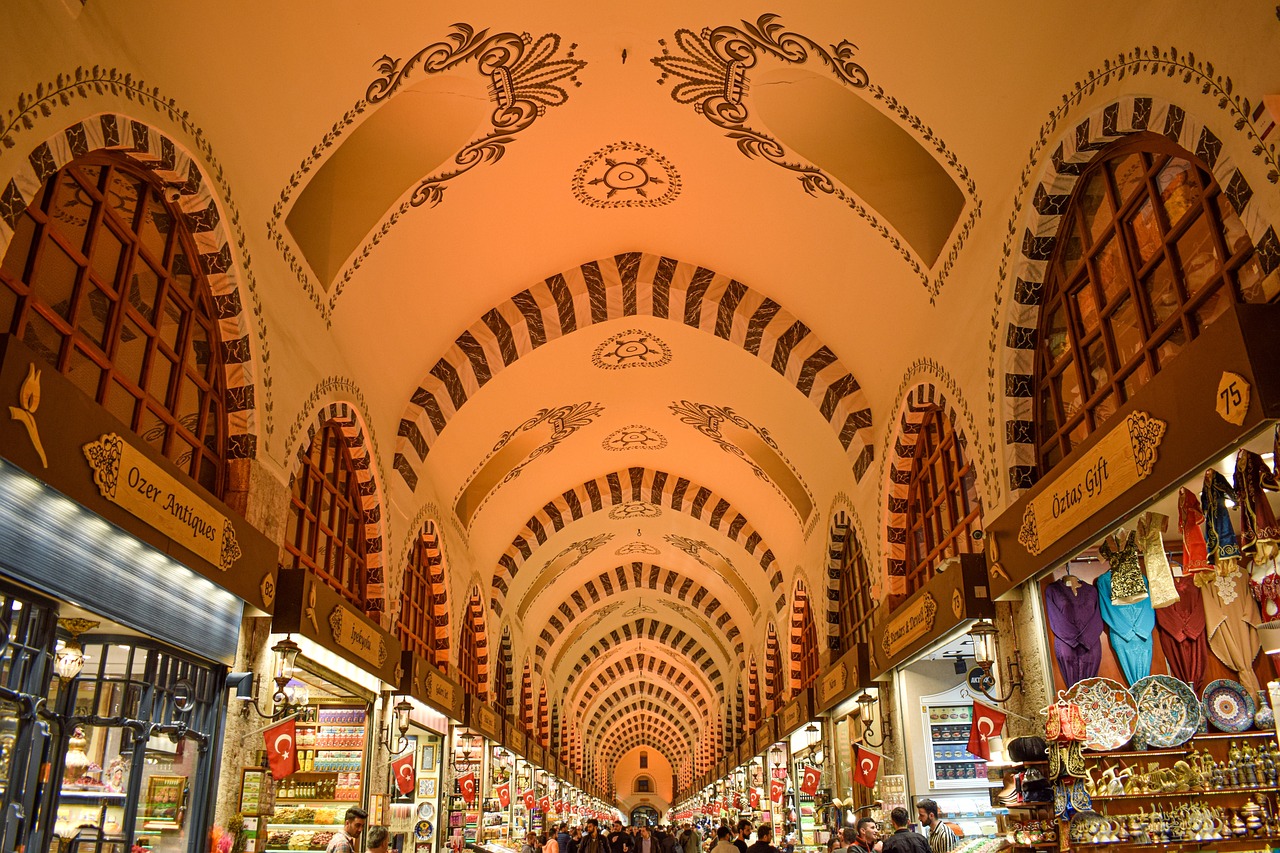
The Egyptian Bazaar was designed by Kazım Ağa, one of the most important architects of the period. The bazaar, which has an L-shaped structure, appears simple from the outside but is surprisingly rich once you step inside. Accessible through six main gates, the bazaar houses 86 shops and countless stalls.
Life Under the Domes
The interior of the bazaar is covered with small domes, and this architectural structure provides natural acoustics and coolness inside. Even in the sweltering heat of summer, the interior of the bazaar remains quite cool. Each of the arched structures rising toward the ceiling brings the architectural understanding of the past into the present.
How Does Time Pass in the Egyptian Bazaar?
From the Quiet of Morning to the Crowd of Evening
When you enter the bazaar in the morning, you feel the tranquility of the stalls just opening. Shopkeepers arrange their products one by one, grind spices, and polish dried nuts. Around noon, the bazaar begins to bustle. Tourists, locals, gourmets, curious visitors… Each of them comes here not to find something, but to experience something.
Scents, Sounds, Colors
You don’t just enter the Spice Bazaar with your eyes, but with all your senses. The sharp yellow of turmeric, the earthy scent of black pepper, the crunch of fresh nuts, the pastel colors of Turkish delight… Every detail draws you into another world . Within a few minutes, your sense of time changes. You might think five minutes have passed, but hours have gone by.
What to Buy? The Joy of Getting Lost in the Spice Bazaar
Spices and Beyond
Of course, the heart of the bazaar is spices. However, this word alone does not do justice to the Mısır Çarşısı. Here you will find:
- Saffron,
- Sumac,
- Cardamom,
- Ginger,
- Black pepper,
- Anise,
- Cinnamon, and many other spices are available together.
Each has its own story, origin, and uses in cooking or traditional medicine. The shopkeepers don’t just sell these products; they tell you their history.
Lokum, Nuts, and Herbal Teas
In the Spice Market, you can find not only spices but also Istanbul’s best Turkish delight, candies, dried fruits, nuts, and herbal teas. Especially the handmade natural blends are ideal for those seeking both taste and health. The methods used in blending herbal teas sometimes date back to century-old recipes.
More Than Just a Shopping Spot: Cultural Heritage
Traditional Craftsmanship and Artisanship
The profile of the merchants in the Spice Bazaar is far from ordinary. Many shops have been run by the same family for generations. So, the person standing behind a spice counter today may be continuing a tradition passed down from their great-grandfather. This gives the bazaar a unique chain of craftsmanship.
A Meeting Point of Languages and Cultures
Most of the merchants in the bazaar speak several languages. This is because the bazaar has been a hub of international trade for centuries. French, English, Arabic, Spanish… You can hear it all here. Exploring the Egyptian Bazaar is not just about shopping; it’s also a cultural journey.
How to Get to the Egyptian Bazaar: Practical Information
How to Get There?
- Address: Rüstem Paşa Mah., Fatih, Istanbul
- Nearest Transportation Point: Eminönü Ferry Terminal, T1 tram line (Eminönü stop)
- Opening Hours: Daily from 8:00 AM to 7:00 PM (except the first day of religious holidays)
- Entrance Fee: Free
Tips
- Going early in the morning is ideal to avoid crowds.
- Be polite but firm when bargaining.
- It is usually possible to smell or taste products before purchasing them.
Why is the Spice Bazaar still alive?
A Spirit That Endures Time
Many places in Istanbul are historic, but not all of them are alive. The Spice Bazaar is both historic and a living space. Here, the past greets you, seeping into the present. Despite new-generation café chains and shopping malls, this place is still standing. Because people don’t just shop here; they collect memories.
The Spirit of Istanbul Blends with Spices
The Spice Bazaar reminds us of many values that modern city life has forgotten: the memory of scent, traditional craftsmanship, the power of conversation, the value of patience and hard work… Perhaps that’s why, when you leave here, you carry not just packages but also the scent of memories.