
A Silent Monument in the Heart of Istanbul
Istanbul is a city unlike any other in the world, with its historical layers, intertwined civilizations, and dazzling architecture. However, the most striking structures of this magical city are not only the mosques rising toward the sky or the castles surrounded by walls. Some are located deep underground. One of these structures, perhaps the most impressive, is the Yerebatan Cistern.
The Yerebatan Cistern is like a mystical window into the depths of Istanbul. It is not just a water reservoir; it is also a tangible reflection of Byzantine engineering genius, an example of Ottoman refinement, and a cultural treasure of the present day.
The Origin of the Cistern’s Name
It is called “Yerebatan” because it is a completely enclosed structure, and upon entering, it gives the impression of sinking into the ground. Historical records refer to it as the “Basilica Cistern” during the Byzantine period, as it once housed a large structure known as the Stoa Basilica.
The Birth of a Millennium-Old Structure
The Byzantines’ Struggle with Drought
The Yerebatan Cistern was built during the reign of Emperor Justinian I (527–565). At that time, the Byzantine Empire was continuing the legacy of Rome and making serious investments in urban infrastructure. Istanbul (then known as Constantinople) placed great importance on cisterns due to the distance of its water sources from the city.
For this reason, the Yerebatan Cistern was built at one of the city’s most strategic locations. The aim was to ensure an uninterrupted water supply for palaces, official buildings, and the general population.
A Underground Palace Rising with 336 Columns
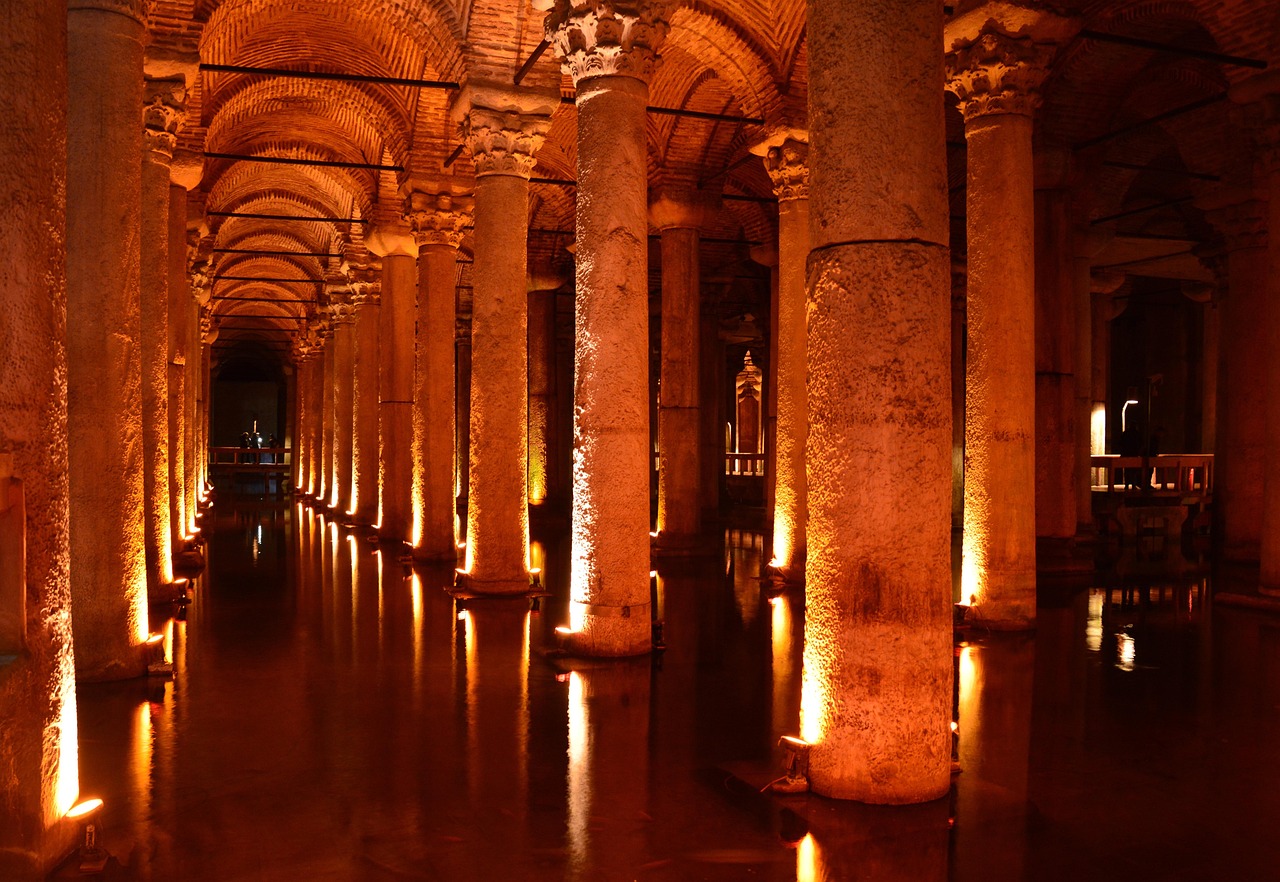
The architectural structure of the cistern is awe-inspiring. A total of 336 columns, 9 meters high and arranged in 12 rows, stand tall. These columns may have been transported from different periods and structures, reflecting the Byzantine tradition of “reuse” (spolia). Each column whispers a different story.
The Silence Under Medusa’s Shadow
The Face of Mythology Carved in Stone
One of the most striking sections of the Yerebatan Cistern is undoubtedly the Medusa heads. These heads, used as the bases of two columns, are mysteriously positioned—one lying sideways and the other upside down.
Why Upside Down?
There is no definitive explanation for this. Some suggest it is a mythological protective ritual, placed this way to neutralize Medusa’s power to turn people to stone. Others argue it is simply practical, with the existing stones being reused. However, the result remains the same: the Medusa heads leave a deep impression on visitors’ minds.
The Untold Story of the Cistern
Will the Ottoman Cistern Be Forgotten?
When the Ottomans took over the city with the conquest of Istanbul, they were initially unaware of the Yerebatan Cistern. Over time, it is said that the cistern was rediscovered when water began to seep out of damp basements and even wells in some houses.
According to another story, people were rowing under their homes to catch fish, as small fish lived inside the cistern. These accounts show that Yerebatan was not merely an architectural structure but also a living entity.
The Yerebatan Cistern in the Modern Age
Restoration and Revival Through Light
The cistern underwent extensive restoration by the Istanbul Municipality in 1985. Since the 1990s, it has been open to both local and foreign tourists. The carefully placed lighting system further enhances the mystical atmosphere of the cistern.
Integration with Art and Culture
The Yerebatan Cistern is not merely a tourist attraction; it has also hosted numerous art events, film shoots, and classical music concerts. In 2016, several key scenes from the film adaptation of Dan Brown’s novel “Inferno” were filmed here.
The Dance of Shadow and Water: The Visitor Experience
What Do You Feel When You Enter?
When you step into the Yerebatan Cistern, the first thing that greets you is the shadows of the columns reflected on the water’s surface under dim lighting. A deep silence gives the impression that time has stopped. At times, you may hear the faint melody of classical music. This is not just a structure; it is like a time capsule.
Getting Lost in the Reflections
As you walk through the cistern, pay attention to the water beneath your feet. It seems as though every column has a reflection, and these reflections are so clear that they make you question your own reality. At that moment, it’s easy to imagine yourself as a Byzantine soldier.
What You Need to Know Before Visiting
Entrance Fee, Visiting Hours, and Recommendations
- Location: Sultanahmet, directly across from Hagia Sophia. Just a few minutes’ walk from Topkapı Palace.
- Entrance Fee: Different pricing applies for local and foreign tourists.
- Visiting Hours: Generally open from 9:00 AM to 7:00 PM. May close later during summer months.
- Tips:
- Visiting early in the day helps avoid crowds.
- If you plan to bring a camera or tripod, consider the lighting conditions.
- Be careful when walking as the ground may be slippery.
Why Visit the Yerebatan Cistern?
The Hidden Face of Istanbul
The Yerebatan Cistern is not just an architectural masterpiece; it is also a place where history, legend, and silence come together. Just a few meters below the hustle and bustle of Istanbul, time seems to stand still. Descending into this place means both feeling the breath of the past and embarking on your own inner journey.
So, if you ever find yourself in Istanbul, don’t just look up at the minarets—take a moment to gaze at the columns beneath the ground. Perhaps the true city lies hidden in those cool stone corridors where silence reigns.